










For the first time in two years, the Olympic flame was burning again. The event was taking place in Italy, lighting up the official host cities of the 2026 Winter Olympics, Milano and Cortina. For the first time, two torches were lit because of the co-hosting cities. Milano hosted the ice events and the sports in the mountain regions, while Cortina hosted the snow and sliding events. Multiple U.S.performances stand out from the rest, breaking droughts, incredible comebacks, or finally getting a sought-after Olympic gold medal.
The most decorated Olympic Bobsledder of all time, Elana Meyers Taylor, was hunting for the gold in the Women’s Monobob. The four-time Olympian with three silver medals and two bronze, was going for gold as she had come up just short in the last three Olympics. This year, it appeared to be a repeat, as going into the final run, she found herself 15 hundredths of a second behind German, Laura Nolte, and fellow American Kaillle Humphries, sitting in third. Humphries was the first of the three to perform her final run, where she jumped to first place, securing herself a medal. Before this was for certain, though, she would need to stand by as both Nolte and Meyers Taylor were still to go. Meyers Taylor was the next to go and laid it all out as she was able to take the lead and finish 12 hundredths of a second ahead of Humphries and clinched herself at least a silver medal with only Nolte to go. Nolte was looking great heading into her final run as she was comfortable, and the only thing standing between her and the gold medal was a clean run. This clean run was alive until the first checkpoint, as she hit two walls to only send her two hundredths of a second ahead of Meyers Taylor with a lot of lost momentum. The clock would only stay green for the next 7 seconds as she soon fell behind the time of Meyers Taylor’s and would not be able to make up that time as she crossed the line trailing the American and falling from first to second four hundredths of a second behind. Meyers Taylor, reading the clock and realizing what she had just accomplished after so many years, fell to the ground in tears with her two sons by her side. With this medal, she tied Bonnie Blair and became the most decorated female winter Olympic athlete in U.S history. This record she would also later share with Humphries, who finished third in both the Monobob and 2-woman event to also claim her sixth winter Olympic medal.
Nothing says back and forth like the slalom, and Mikaela Shiffrin proved this over her Olympic career. Not medaling in her last 13 Olympic races for what people thought could have been the best time to medal, and failing, she proved everyone wrong in the women’s slalom. On her first run, she was head and shoulders above the best, cutting through the snow like butter, on her way to lead by over eight-tenths of a second, proving to be the favorite going into run two. (For reference, eight-tenths of a second was also the difference between second and tenth place.) But this dominance didn’t just stop after the first run; all she needed to do was control her lead, but she came to play and extended her lead again, leaving a race for silver as she won by a staggering one and a half seconds. This is the third-largest margin ever in women’s Olympic slalom. This also marks her third Olympic gold, becoming just the fourth American to win three Olympic golds at the winter Olympics. In what may be her last Olympic Games, she solidified her greatness in this event and her ability to fight back.
One of the most dominant Olympic performances came on the sticks of the United States women’s hockey team. Looking to earn their third gold medal ever in the Olympics, they would have to go through their biggest competition in the sport, the Canadians. With six of the seven gold medal games being decided between these two teams, they were the favorites yet again to meet in the final match for gold. However, to get to this game, they would first need to play in a round robin tournament to decide rankings. This was not a problem as throughout their four games, they handled each team with ease, defeating Czechia five to one in their opening game, and shutting out Finland, Switzerland, and Canada soon after with scores of five to zero, clinching them the first seed heading into the quarterfinals. The playoff rounds were no different, as a physical six-to-zero win against the host country of Italy, which led them to the semis, where yet again they would have another five-to-zero win against the Swedes. Just as everyone anticipated, it was the U.S. vs Canada fighting for gold, but this was not going to be as easy as the preliminaries, as during that game, the captain for the Canadians, Marie Philp Poulin, was out with an injury and was looking to win her fourth gold medal in her fifth games. It was a slow first period as teams were shaking off the nerves, so the first goal didn’t come until the second. This goal came shorthanded as a weird bounce of the glass put the puck right in front of Kristin O’Neil, who sprinted to a back-handed goal to give Canada a 1- 0 lead halfway through the second. There were plenty of opportunities for the U.S.to score, but they could not find the back of the net, and with two minutes left in the third, the U.S.knew what needed to be done and pulled goalie Erin Frankel to have an extra attacker as they took a faceoff in Canada’s zone. Alex Carpenter stepped up to the challenge, winning the face-off, and after passing around the edges, the puck found Laila Edwards up top by the blue line, where she fired a shot to the masses, where Hilary Knight was patiently waiting and tipped the puck in with two minutes left to tie the game and send it to overtime. In overtime, Canada had a chance for a minute and a half in which a breakaway occurred, but Abbey Murphy was quick to come back on defense and made a great stick poke to take away a great chance and keep the U.S. in the game. Four and a half minutes in, Megan Keller called a game, and found herself near the blue line when Canada was going for a change; she was on an island and with only one changer behind her. She moved towards the goal and snuck a backhand shot below Ann-Renée Desbiens’ glove to secure the golden goal and mark the third goal medal for the U.S. Women’s hockey.
With only one American being able to secure three medals, two of which were gold, Jordan Stolz was able to put his name on the map for all to watch. He started the 2026 Olympics off on the right foot as in his first event of the 1000 meters, racing against Jenning De Boo of the Netherlands. He was melting ice with his blazing speed as he found himself back by four-tenths of a second after the first lap, where he was able to kick into another gear, passing De Boo in exhilarating fashion, beating him by a margin of a half-second, which gave him the Olympic record and later the gold medal. The 500 was de ja vu as yet again he found himself against De Boo as the second-to-last pair to go. This race had the same story as the last, a comeback by Stolz in the last meters to another gold medal and Olympic record. He finished his Olympics with a silver medal in the 1500 and a fourth-place finish in the mass start. He became just the second skater ever to win gold in both the 500 and 1,000 after Eric Heiden, who was able to win five golds in the 1980 Olympics. Hopefully, Stolz may even come close to this record in 2030, as he is looking forward to competing, and he is still in the prime of his years.
Alex Ferreira wanted one thing and one thing only at the 2026 games, and that was a gold medal in the freestyle skiing men’s halfpipe. After securing a bronze in Beijing and a silver in PyeongChang, he went into the 2023 season more motivated than ever, practicing for the next quad, but he took two hard falls in the X-games and was close to quitting, but told himself he never wanted to be this defeated and bruised again. Ferreira was willing to give up anything to complete the set and get a gold in Milano Cortina as he said the gold medal would be the first thing he thought of as he was waking up and the last thing on his mind as he went to sleep.. Going into his third and final run it was looking like the gold would stay elusive once more as he was sitting in second place with a score of 90.50 behind Estonia’s Henry Ferreira would need a score of above 92.75 to keep his golden dreams alive. Finishing a great run with a right side double cork 1620 with a tail grab stomped the landing, and spun his pole in the air as he headed to hear his score. The score did not disappoint as he leaped frog into first place with a 93.75 and only three riders remaining. The one rider was not able to topple Ferreira’s score, which meant that his dreams had come true and he was now the 2026 Olympic gold medalist. Ferreira soaked up the moment as the star spangled banner sounded into the night, and said the feeling was so much better than he ever could have imagined.
This gold medal was not a miracle for the U.S. men’s hockey team; it was hard work and a battle. Similar to the Women’s team, they went undefeated in round robin play, taking down Latvia, Denmark, and Germany in wins of 5-1, 6-3, and 5-1, respectively. In the quarter final, they were set to face their biggest competition yet and were facing 1-off against Sweden. This game was a defensive battle because both teams were known for their strong defensive play, not their offense. This proved to be true as the first period ended 0-0 with both teams getting chances but never being able to capitalize. This changed in the second period when Jack Hughes fired a shot on net, and Dylan Larkin was in the right place at the right time as he redirected the shot halfway through the second period to take the first lead of the game. It was looking like the Americans were going to take the win, but with two minutes to go, Sweden pulled their goalie and with an extra man on the attack found the back of the net to force overtime. With a 3-on-3 overtime to decide who would go home and who would automatically have a chance to play for a medal, it was high stakes. USA’s defensemen Quinn Hughes stepped up in the moment, three and a half minutes into overtime, Hughes waved off the bench to continue on and slung a shot glove side for a bar in goal to book them a ticket to the semifinal game. This game would be over before it even started, with the Americans scoring their first goal just five minutes in, and going into the third period, they had a commanding 5-0 lead. The Slovaks scored two in the third, but it was just too little too late, and the U.S. would move to the gold medal game after a 6-2 victory. Then it was the moment we were all waiting for, the final event of the Olympics would take place at 5 a.m. PST with the men on the ice as they take on our neighbors from the north. From the jump, it was a very physical game with teams trading hits, and the ice tilted in Canada’s favor as they were getting multiple shots off while the U.S. was coming up empty-handed. That is, until Matt Boldy got creative, popping the puck up in the air and hitting it once again to get it past some of the best defenders in the world and using Jordan Binnington’s momentum against him to sneak the puck stick side and take an early one-goal lead in the first. The game was still in Canada’s favor, but the defense was just too much, even for a minute and a half of 5 on 3; they failed to get a shot past Conner Hellebuyck. That is, until a face-off win in the Americans’ zone and a couple of good passes leaving Cale Makar on an island, who rammed one stick side to tie it up with two minutes to go in the second. The third period will be remembered as Hellebuyck’s period as he stopped all 12 of Canada’s shots, including an incredible stick save on Johnathon Toews, who was point blank in front of the net, and a Macklin Celebrini breakaway to send the game to overtime. Overtime picked up right where the third period left off with multiple Canada chances, but it was one decisive moment when Zach Wrenski bobbled the puck and put it in between Jack Hughes of the U.S.and Makar of Canada. It was a mad dash for the puck because if Makar could get to it first, it would set up a two-on-goalie with him and Conner McDavid, which could surely find the Americans coming home with silver jewelry. But instead, it was Jack Hughes who extended to reach the puck first, setting up a 3 on 1 for the Americans. Wrenski chased down the loose puck and stopped on a dime, setting up a cross-ice pass to Jack Hughes, who yet again used Binnington’s momentum against himself, sneaking the puck five whole and sending the U.S. home with gold around their necks.
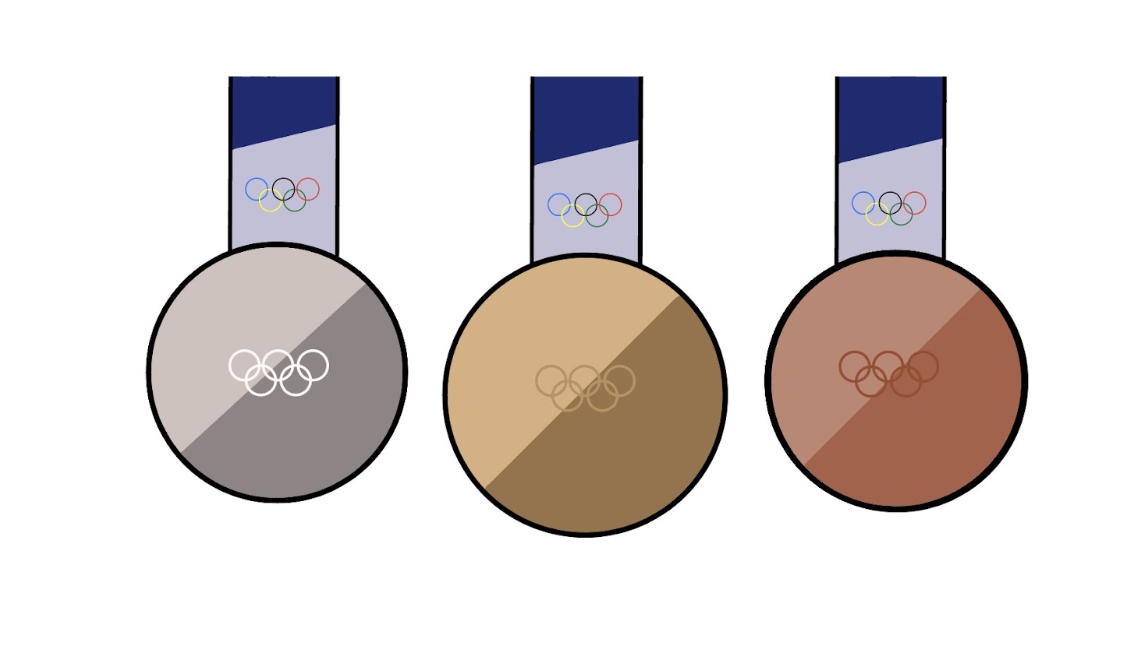
These Olympics marked the most all-time gold medals in American history, with 12 and 33 medals overall, the most medals in a game outside of North America. It is also important to say the future is bright because of a total of 85 different medalists, 58 of whom stepped onto the podium for their very first time. This was an impressive outing for all Americans, and now, as we look forward to the Paralympic Games, which start on March 6th, we hope to keep the winning streak alive as the torch is passed on once again.